

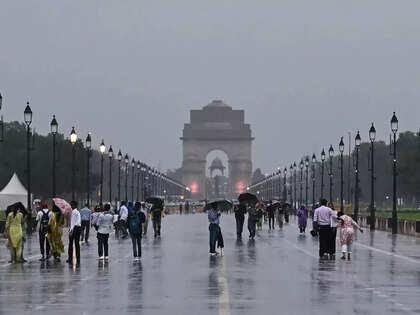
A sudden turn in Delhi’s weather draped the capital in heavy rain, turning the morning’s flight schedules into a slow-moving puzzle. At Indira Gandhi International Airport, 15 flights were diverted and more than 100 delayed as downpours cut visibility and stretched turnaround times on the ground. The disruption rippled beyond the city, nudging connections across domestic and international networks and prompting airlines to urge passengers to check real-time updates before heading to the airport.
Inside terminals, departure boards flickered with revised times while aircraft idled for new slots, their departures spaced out by air-traffic control. No single failure was to blame-just the familiar calculus of safety margins, saturated runways, and the tight choreography of modern air travel meeting a monsoon burst. This article unpacks how a spell of rain can unsettle a major hub, what it means for travelers, and how the system steadies itself when the skies finally clear.
Torrential rains stall operations at Delhi airport
Relentless showers drenched runways and aprons, stretching turnaround times and pushing air traffic control to widen in‑trail spacing. With water pooling near remote bays and ground crews rotating in weather gear, several departures were re-sequenced while arrivals held overhead or were sent to alternates. By mid-day, at least 15 diversions to nearby airports and 100+ delays were logged, as visibility swung in and out of safe thresholds and baggage belts slowed under the surge of disrupted schedules.
Passengers reported crowded check-in zones and frequent gate swaps, while airlines issued rolling advisories and activated reaccommodation protocols. If you’re booked to travel, expect variable boarding times and keep notifications on-meal vouchers and change-fee waivers may be available on affected sectors. To reduce hassle and reach the terminal smoothly, consider public transit where possible and carry essentials in your cabin bag.
- Monitor your airline app for gate changes and revised ETDs.
- Arrive early with extra buffer; security queues may build unpredictably.
- Pack smart: meds, chargers, snacks, a light rain layer in hand baggage.
- Know your options: same-day rebooking, fare difference policies, vouchers.
- Keep receipts for potential claims on incidentals if policies allow.
| Impact | Status |
| Flights diverted | 15 (to Jaipur, Lucknow, Amritsar) |
| Delays recorded | 100+ across arrivals/departures |
| Avg delay window | 45-90 minutes |
| Runway ops | Intermittent slowdowns |
| Advisory | Check-in early, expect resequencing |

How low visibility waterlogged aprons and crew duty limits triggered a cascade of delays and diversions
As the downpour thickened over Delhi’s IGI, the runways kept ticking under instrument procedures, but the real choke point shifted to the ground. With apron surfaces ponding, marshallers and tow teams paused movements, parking stands cycled in and out of closure, and arriving aircraft found limited space to dock. Simultaneously, low RVR (runway visual range) meant greater spacing on finals, stretching arrival queues even as the ramp slowed to a crawl, creating a classic ground-air mismatch.
- Blocked bays from standing water and repeated FOD sweeps.
- Remote busing curtailed in sheets of rain, reducing stand options.
- Fuel, catering, and baggage trucks slowed by flooded service roads.
- Low-visibility taxi procedures and temporary taxiway closures.
- Turnarounds ballooned from ~35 minutes to 75-100 minutes on busy banks.
Those stretched turnarounds shoved rosters against Flight Duty Period ceilings; as crews timed out, ready aircraft lacked legal staffing, forcing ad‑hoc swaps, rolling delays, and selective cancellations. With holds mounting, dispatchers pointed inbound tails to alternates, while departures at Delhi lost their assigned aircraft. By evening, 15 flights diverted and 100+ departures absorbed significant delays, fanning disruption across airline networks.
| Alternate | Diverted |
|---|---|
| Jaipur (JAI) | 6 |
| Lucknow (LKO) | 4 |
| Ahmedabad (AMD) | 3 |
| Amritsar (ATQ) | 2 |
- Slot misses cascaded into new ATC flow restrictions at metros.
- Aircraft out of position propagated delays into the late-night and morning waves.
- Crew rest resets triggered re-crewing needs on first departures.
- Passenger handling strain: rebooking, tight connections lost, and baggage separation to reconcile.

Network wide effects and realistic timeline for restoring normal schedules
When weather shuts down a major hub, the disruption doesn’t stop at the perimeter fence. With 15 diversions and 100+ delays, aircraft and crews are pulled off their carefully sequenced rotations, pushing ripple effects into late-night waves and early-morning banks across the network. That means thinner buffers on trunk routes, tight turnarounds in Tier-2 cities, and pressure on maintenance windows. The result is a rolling queue rather than a single bottleneck, as each missed slot spawns new constraints downstream-gate availability, crew duty limits, and even stand allocation for diverted jets returning from alternate airports.
- Crews out of position: Duty-time expiries force swaps, extending delays.
- Aircraft rotations skewed: One late arrival cascades across 3-6 subsequent flights.
- Diversion airports saturated: Fuel, stands, and de-boarding capacity stretched.
- ATC flow management: Increased spacing on wet runways compresses hourly throughput.
- Connectivity strain: Missed banks reduce rebooking options in the next wave.
A practical recovery hinges on a stable weather window and consistent runway acceptance rates. Once rainfall intensity drops and arrival spacing normalizes, airlines typically prioritize long-haul departures, consolidate low-demand frequencies, and launch recovery ferries to reposition aircraft and crews. Realistically, expect a stepped return to rhythm, with the evening wave absorbing some backlog and deeper normalization unfolding overnight as rotations re-align and maintenance slots are rebooked. The table below outlines a conservative timeline from the moment conditions improve.
| Window | Airline Focus | Passenger Outlook |
|---|---|---|
| 0-3 hrs | Clear backlog; protect long-hauls | Staggered departures; limited seats |
| 3-8 hrs | Reposition crews/aircraft; combine flights | Improving on-time; more rebook options |
| 8-18 hrs | Restore rotations; add relief sectors | Most routes stabilizing; minor residuals |
| 18-36 hrs | Regular pattern; clear maintenance backlog | Near-normal schedules; isolated delays |

Actionable steps for travelers and airlines to navigate disruptions and speed up recovery
Real-time awareness and friction-light choices shrink delays when rain stalls departures in Delhi. Travelers who pre-load boarding passes, travel light, and monitor gate changes can move the bottleneck from the counter to the cloud; airlines that push single-source updates and pre-authorize waivers can redirect demand before queues form. Focus on early de-risking: protect crew duty clocks, stage buses and stairs for remote bays, and ration slots to the most connection-critical banks.
| Role | Quick action | When |
|---|---|---|
| Traveler | Switch to carry-on | Before leaving home |
| Traveler | Use airline app for rebooking | At first delay alert |
| Airline | Push IRROPS SMS with self-serve links | T+5 minutes from ATC hold |
| Airline | Rolling waivers on same/next day | As METAR worsens |
- Travelers:
- Check in online, screenshot your boarding pass and PNR for offline use.
- Track status via the airline app and the airport feed; enable push notifications.
- Arrive earlier than usual and use priority/security single lines if eligible to reduce miss risk.
- Proactively request same-ticket rebooking when the delay exceeds your minimum connection time.
- Airlines:
- Activate an IRROPS playbook: crew legality check, aircraft swap options, and gate reassignment tree.
- Publish a single source of truth (web/app banner) and mirror it to contact center and social.
- Pre-clear change-fee waivers and offer one-click self-service for volunteers off peak flights.
- Stage ground assets (GSE, stairs, buses) and coordinate with ATC for slot recovery windows.
Maintain recovery momentum with short-cycle coordination: 15-minute ops huddles, a live connection protection list, and transparent time-to-clear estimates. Close the loop post-event-update the diversion matrix, refresh crew pools, and publish a brief after-action note so teams and customers know what improved for the next storm cell.
Key Takeaways
As the monsoon thins to a silver haze over the runway lights, Delhi’s airspace is still recalibrating-15 diversions and more than a hundred delays traced back to a single weather system that arrived faster than timetables could bend. Ground crews shuffle gates, pilots wait out ceilings, and air traffic control redraws the day’s choreography, one clearance at a time.
For passengers, the most reliable compass remains timely information: airline apps and alerts, updated departure boards, and flexible plans if recovery waves stretch into the evening. For the airport and carriers, the path forward is measured-staggered departures, crew rotations, and windows of workable visibility.
When the clouds do part, the backlog will unwind in careful sequences. Until then, Delhi-and the routes that thread through it-moves at the pace of the weather, poised for the first clear patch of sky.