

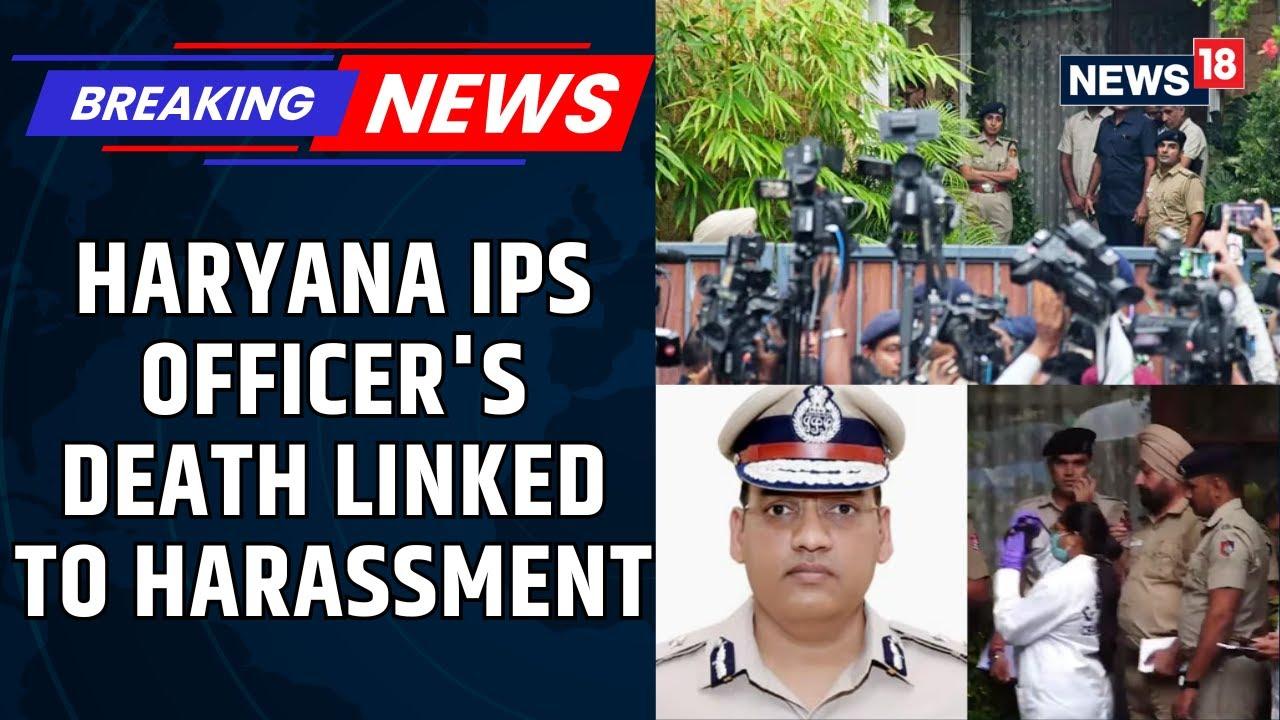
Shock and silence share the room when a senior officer’s life ends unexpectedly. In the aftermath of an IPS officer’s death by suicide, the case has veered from private grief to public scrutiny after his wife lodged a formal complaint naming the Haryana Director General of Police and alleging sustained harassment. The accusation, now at the heart of a widening inquiry, pits personal testimony against institutional power and demands a meticulous examination of timelines, workplace dynamics, and accountability within the force.
Authorities have signaled that due process will be followed, even as colleagues, legal experts, and the public caution against speculation. What began as a tragedy is quickly becoming a test-of transparency, of leadership, and of the systems meant to support those who serve. As investigators move from whispers to evidence, the story now turns on what can be proved, and what it reveals about pressure and protection in policing.
From allegation to investigation mapping the timeline and the complaint against the state DGP
According to the widow’s complaint, the senior officer’s final months were marked by escalating workplace pressures and repeated representations to superiors that, she says, went unanswered. The document reportedly details a pattern of alleged intimidation, punitive postings, and professional isolation, culminating in a plea for institutional relief and an appeal for independent oversight. She has named the state DGP in the complaint, asserting that the environment became untenable and eroded her husband’s mental well-being. Authorities, meanwhile, have emphasized due process, noting that these are allegations subject to verification and that no determination of wrongdoing has been made.
Investigators are now piecing together a chronology of events using call records, official correspondence, and service files to establish what happened, when, and who was informed at each stage. Internal vigilance units, in tandem with district and state-level teams, are examining transfer logs, performance notes, and grievance registers, while digital forensics focus on phones, emails, and chat archives. The office of the DGP has indicated cooperation with the inquiry. Officials say the probe will center on causality, institutional response times, and compliance with employee-welfare protocols, with the findings to be placed on record for further legal review.
- Key assertions in the complaint: Coercive supervision, adverse postings, and ignored representations.
- Evidence cited: Messages, emails, and copies of written grievances.
- Relief sought: Independent probe, preservation of digital and documentary records, and witness protection.
- Official stance: Allegations under examination; full cooperation promised by senior offices.
| Time Marker | Event | Source/Status |
|---|---|---|
| Month −3 | First internal grievance raised | Documentary review underway |
| Month −1 | Alleged adverse posting and warnings | Service records being examined |
| Week −1 | Escalation to higher authorities | Receipt acknowledged |
| Day 0 | Tragic death reported | Forensic protocols initiated |
| Day +1 | Complaint naming state DGP filed | Registered for inquiry |
| Day +3 | Multi-agency investigation formed | Scope and TOR notified |
| Ongoing | Digital, documentary, and witness audits | Findings pending |

Inside the workplace culture assessing command responsibility and safeguards within Haryana Police
Allegations of workplace harassment inevitably turn the lens inward, toward the everyday textures of command, supervision, and care. In a force where hierarchy is non‑negotiable, command responsibility is not only about issuing lawful orders; it also means monitoring tone and impact, preventing abuse of authority, and ensuring a timely, documented response when concerns arise. The culture that forms around this chain-briefings, informal calls, messaging groups, transfer dynamics, performance targets-either reinforces dignity and due process or breeds silence. Real accountability lives in the gap between what manuals promise and what personnel actually experience at midnight assignments, in appraisal rooms, and during high-pressure investigations.
Safeguards work when they are visible, accessible, and auditable. That means clear duty-of-care protocols, confidential reporting channels, and independent review of complaint handling-paired with mental‑health support that is proactive, not performative. A resilient environment balances lawful obedience with a climate in which officers can flag coercive instructions, seek help without stigma, and expect non‑retaliation. The test is simple: can a junior document a concern, escalate it outside the immediate hierarchy when needed, and receive a reasoned outcome within a set timeline-while the system records each step for later scrutiny?
- Healthy signals: written tasking logs, time‑bound feedback, anonymized climate surveys, regular well‑being check‑ins, supervisor 360s.
- Risk signals: verbal-only directives on sensitive tasks, frequent off‑duty summons, opaque transfers, punitive appraisal swings, stalled inquiries.
- Protection measures: confidential ombud access, digital audit trails for orders, peer‑support and trauma care, anti‑retaliation safeguards, external oversight for sensitive complaints.
- Performance safeguards: caps on after‑hours communications, rotation in high‑stress postings, mandatory documentation of counseling, periodic command‑climate audits.
| Mechanism | Owner | Visibility | Timeline |
|---|---|---|---|
| e-Orders Log | HQ IT Cell | Audit on demand | Real‑time |
| Ombud Channel | Independent Desk | Confidential | 72 hours |
| Peer Support | Wellness Unit | Opt‑in | 24×7 |
| Retaliation Watch | Vigilance | Quarterly report | 90 days |
| Climate Audit | External Panel | Public summary | Annual |

The legal lens standards for abetment of suicide evidence due process and oversight mechanisms
When allegations of harassment surface after a senior officer’s death, the law demands a high evidentiary threshold to establish criminal abetment. Under IPC Sections 306 and 107, prosecutors must prove mens rea, instigation or intentional aid, and a proximate causal nexus between the accused’s conduct and the death. Courts scrutinize patterns-documented communications, official orders, performance reviews, transfers, or public humiliation-to separate workplace friction from sustained coercive behavior. Due process requires early preservation of devices and files, authentication of any note or messages, and an independent chain of custody. Given the naming of a top-ranking official in the complaint, conflict-of-interest safeguards become pivotal: recusals by potentially interested superiors, transfer of inquiry to an independent SIT/CBI, and judicial oversight to guard fairness for all parties.
- Intent and Instigation: Evidence of purposeful goading, threats, or targeted coercion.
- Proximity: Temporal and situational closeness between alleged acts and the death.
- Pattern Proof: Emails, memos, postings, call logs, and witnesses showing a sustained course of conduct.
- Voluntariness: Exclusion of alternative causes; careful evaluation of mental health context without stigma.
- Authenticity: Forensic validation of digital footprints; no reliance on unauthenticated materials.
Oversight mechanisms must be both visible and verifiable. A magisterial inquiry (CrPC 174/176) and a parallel departmental vigilance probe can run with judicial monitoring to ensure transparency. Independent forensic labs should examine devices for metadata, while call detail records and access logs are reviewed under court orders. In harassment-linked allegations within a disciplined force, witness protection, whistleblower safeguards, and non-retaliation directives are essential. If the complaint names the highest state police official, the investigating chain should be insulated from that office, with external oversight by human rights bodies or police accountability commissions. The goal is a process that is meticulous, time-bound, and fair-protecting the rights of the complainant, the dignity of the deceased, and the presumption of innocence.
| Mechanism | Purpose | Trigger | Timeline |
|---|---|---|---|
| Magisterial Inquiry | Independent fact-finding | Unnatural death in service | 15-30 days |
| SIT/CBI Transfer | Conflict-free investigation | Allegations against top brass | Court/State ordered |
| Forensic Audit | Device and data validation | Digital evidence recovered | Time-bound, sealed CoC |
| Witness Protection | Safety, non-retaliation | Risk to complainant/witness | Immediate, ongoing |

What should change actionable reforms for mental health support whistleblower protection and independent inquiries
Amid public scrutiny, genuine change begins with embedding care into the system, not just reacting to crises. Agencies should institutionalize trauma-informed policies, normalize help-seeking, and hard-wire safeguards that reduce chronic stressors. This means measurable supports that follow officers across postings and protect families from the ripple effects of high-pressure duties. Key building blocks include:
- Confidential 24/7 clinical support staffed by trauma specialists, with multilingual access and no-reporting to line managers.
- Mandatory decompression protocols after critical incidents, plus protected wellness leave tracked in HRIS, not left to discretion.
- Peer-support cadres trained and rotated to prevent overexposure, with supervision by independent clinicians.
- Psychological safety training for leaders to curb stigma, bullying, and retaliatory practices that silence distress.
- Early-warning dashboards (overwork flags, caseload spikes, complaint patterns) audited by an external mental-health board.
| Action | Lead | Budget | KPI | Timeline |
|---|---|---|---|---|
| 24/7 Helpline + EAP | Home & Health | Moderate | 30% utilization in 6 months | 90 days |
| Decompression Policy | Police HQ | Low | 100% post-incident uptake | 60 days |
| Peer-Support Network | Training Acad. | Low | 1:50 peer ratio | 120 days |
| Leader Training | DoPT | Low | 90% completion | 45 days |
| Risk Dashboard | IT + External Board | Moderate | Quarterly public brief | 150 days |
Protecting those who speak up and ensuring credible fact-finding are non-negotiable. Build a statutory shield that treats whistleblowing as a protected duty, not a career risk, and separate inquiry powers from the chain of command. Independent mechanisms should be transparent, time-bound, and victim-sensitive, with explicit penalties for interference. Practical levers include:
- Anti-retaliation law with reverse burden of proof, interim relief, and guaranteed role protection for complainants and witnesses.
- Encrypted reporting platform overseen by a mixed oversight panel (retired judge, NHRC nominee, civil society, mental-health expert).
- Independent Ombuds/Commission with subpoena powers, custody of evidence, and authority to recommend prosecution.
- Time-bound inquiries (e.g., 90 days) with public summaries, redacting sensitive data but preserving traceability of decisions.
- Comprehensive support-legal aid, counseling, safe transfers/relocation, and whistleblower expense coverage from a dedicated fund.
- Sanctions for interference: career penalties, fines, and loss of command for intimidation or misuse of office.
Concluding Remarks
As grief, anger and allegation converge, the days ahead must belong to evidence. The complaint naming Haryana’s top police officer now enters a process that should be as transparent as it is thorough, with findings grounded in documents, testimony and due procedure-not rank, rumor or haste.
Whatever the inquiry concludes, this moment underscores a larger reckoning: the human cost of policing and the quiet ways workplace pressures can compound. Stronger grievance redressal, credible internal oversight, and accessible mental‑health support are not optional extras; they are the scaffolding of a resilient force.
Official responses and the results of multiple probes are awaited. We will update as the record clarifies. If you or someone you know is struggling, consider reaching out to a trusted person, a mental‑health professional, or a local crisis helpline. In an emergency, contact your local emergency number immediately.