
STBL – Stablecoins, Reimagined
A modern blueprint for a transparent, composable, and resilient digital dollar.
Stablecoins sit at the heart of decentralized finance (DeFi), powering payments, trading, savings, and on-chain commerce. But the past few years have also exposed the limits of today’s designs: centralized custody risks, opaque reserves, brittle peg mechanisms, and fragmented cross-chain liquidity. Enter STBL – an approach to stablecoins, reimagined.
This article outlines an end-to-end design vision for STBL, a next‑gen stablecoin architecture that blends multi-source collateral, transparent on-chain controls, and cross-chain interoperability to deliver reliability, composability, and user-first UX. Whether you’re a builder, trader, or a treasury manager, you’ll learn how STBL aims to combine the best of fiat-backed stability and crypto-native resilience.
What Is STBL?
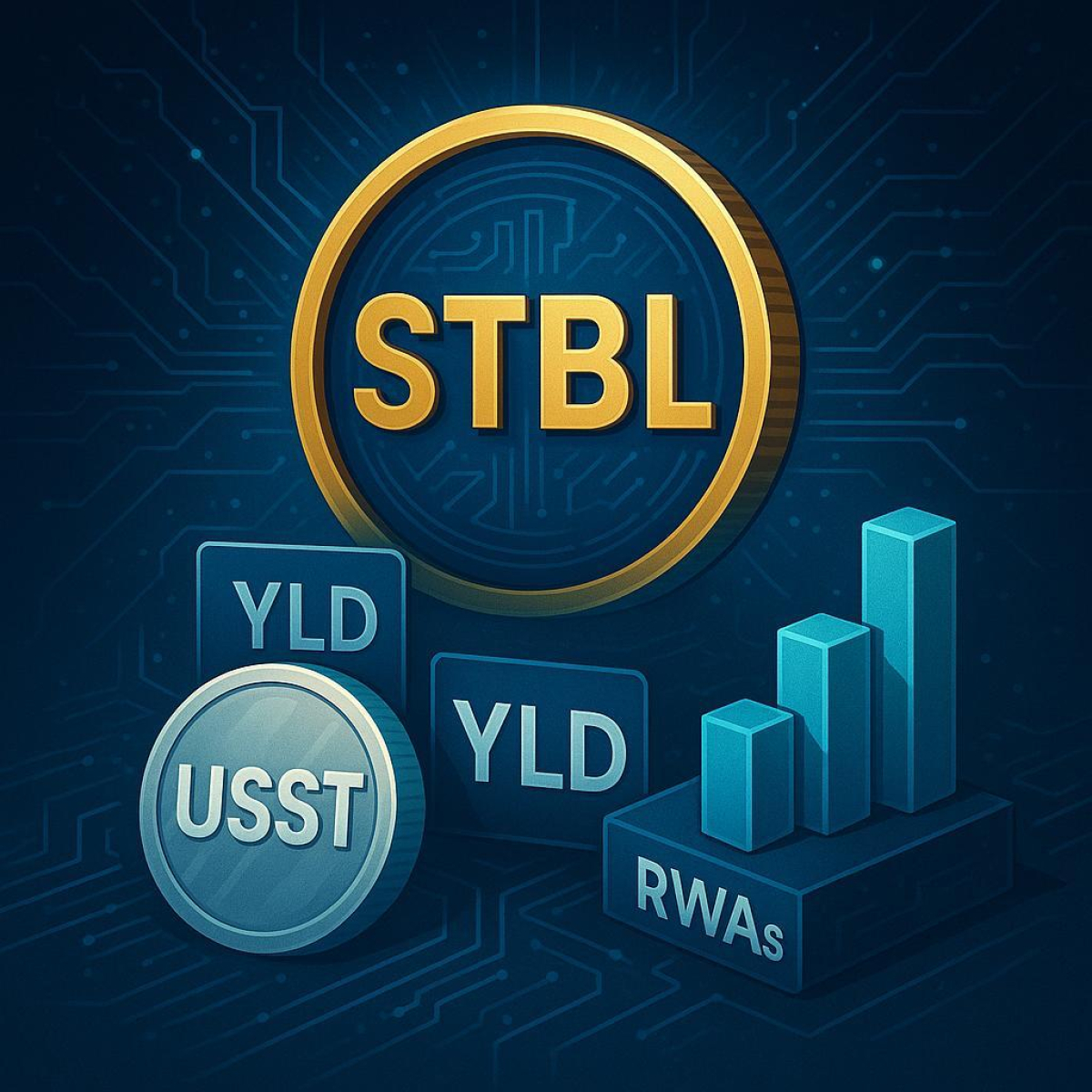
STBL is a collateralized stablecoin concept designed to maintain a soft peg to the U.S. dollar while prioritizing transparency, risk controls, cross-chain composability, and capital efficiency. Instead of relying purely on a single model (like fully centralized fiat custody or purely algorithmic supply), STBL proposes a hybrid collateral architecture and on-chain peg defense informed by robust oracle data and programmatic risk limits.
Think of STBL as a synthesis of battle-tested patterns from DeFi and TradFi:
-
- Multi-source collateral including tokenized fiat reserves, crypto collateral, and delta-hedged positions.
-
- Programmatic peg stability using auctions, mint/redeem windows, and conservative control parameters.
-
- Cross-chain interoperability using canonical mints and audited bridges, with per-chain risk caps.
-
- On-chain proof-of-reserves dashboards and policy transparency for trust minimization.
Why Stablecoins Need Reimagining
Stablecoins are indispensable, but they still face persistent challenges:
-
- Opacity and custody risk: Users want on-chain attestations and real-time reserve transparency.
-
- Fragile pegs: Algorithmic-only designs can suffer from reflexivity in stress markets.
-
- Fragmented liquidity: Bridged versions proliferate, diluting depth and causing price dislocations.
-
- High gas fees and UX frictions: New users need low-cost mints/redemptions and predictable fees.
-
- Compliance complexity: Institutions require predictable KYC/AML pathways without sacrificing composability.
STBL’s blueprint addresses these head-on with defense-in-depth peg mechanics, multi-chain liquidity coordination, and transparent guardrails.
How STBL Works: Architecture and Mechanisms
1) Hybrid Collateral Model
STBL targets a balanced reserve pool designed to perform in different market regimes:
-
- Tokenized fiat reserves (RWA): Short-duration, high-quality assets (e.g., tokenized T-bills via qualified custodians), with on-chain attestations and daily NAV updates.
-
- Overcollateralized crypto: Blue-chip crypto pledged with conservative LTVs, auto-rebalanced to maintain healthy buffers.
-
- Delta-hedged perps: A limited sleeve of delta-neutral derivatives to reduce directional exposure and add market-making flexibility.
Allocation targets and caps are governed on-chain, with emergency circuit breakers to halt expansion or reduce risk during market stress.
2) Peg Stability Toolkit
-
- Mint/Redeem windows: Authorized primary minters and whitelisted market makers can arbitrage STBL toward $1 via transparent fees.
-
- Adaptive fees: A PID-like controller adjusts mint/redeem fees based on deviation magnitude, liquidity, and volatility.
-
- AMM incentives: Liquidity mining that tilts toward pools with lower slippage and deeper depth across leading DEXs.
-
- MEV-resistant auctions: Batch auctions for large redemptions reduce sandwich risk and price impact during high volatility.
3) Oracle and Risk Engine
Accurate pricing and fast reactions are critical:
-
- Redundant oracles: Multi-vendor price feeds with medianization and deviation checks.
-
- Risk limits: Per-asset and per-chain caps, daily VAR checks, and automatic pause thresholds for extreme outliers.
-
- Proof-of-reserves dashboards: On-chain views of collateral composition, utilization, and historical peg metrics.
4) Cross-Chain Interoperability
STBL supports multiple chains via a canonical mint on a home chain and audited bridges to satellites. To prevent liquidity splintering:
-
- Native routing: Where possible, mint/redeem on destination chains to avoid synthetic “wrapped” bloat.
-
- Per-bridge risk caps: Strict limits on outstanding supply per bridge, with circuit breakers.
-
- Unified tickers and metadata: Clear token registry data to reduce spoofing and user confusion.
5) Governance and Compliance
STBL governance focuses on transparency and pragmatism:
-
- On-chain proposals: Parameter updates, collateral add/remove, and fee changes require time-locked votes.
-
- Open audit trails: Smart contract audits and ongoing monitoring are published and versioned.
-
- Compliance pathways: Optional KYC mints/redemptions for institutions, with privacy-preserving proof frameworks where applicable.
Key Benefits of STBL
-
- Resilient peg: Multiple levers (arbitrage, fees, auctions) to dampen volatility in stress events.
-
- Transparency-first: Live dashboards, proof-of-reserves attestations, and on-chain governance records.
-
- DeFi composability: Integrates with AMMs, lending markets, perps, and payments rails across EVM and non-EVM chains.
-
- Capital efficiency: Balanced collateral mix and adaptive fees help maintain depth and low slippage.
-
- Global access: Low-friction onboarding with predictable gas costs via L2s and low-fee chains.
Use Cases: From DeFi to Real-World Payments
-
- Trading and hedging: Pair STBL with majors in AMMs to reduce exposure and slippage.
-
- Lending and borrowing: Use STBL as efficient collateral on lending protocols with stable rates.
-
- Treasury management: DAOs and companies can hold a portion in STBL for predictable runway and on-chain payroll.
-
- Cross-border payments: Near-instant settlement without intermediaries and transparent fees.
-
- NFT and gaming economies: Denominate prices in STBL to stabilize in-game marketplaces.
How STBL Compares
| Feature | STBL (proposed) | Fiat-Backed (e.g., USDC) | Overcollateralized (e.g., DAI) |
|---|---|---|---|
| Backing | Hybrid: RWA + Crypto + Hedges | Cash & T-bills via custodians | Crypto + some RWA |
| Peg Defense | Mint/redeem + adaptive fees + auctions | Mint/redeem via regulated issuers | Overcollateralization + auctions |
| Transparency | On-chain PoR + dashboards | Regular attestations | On-chain collateral visibility |
| Interoperability | Canonical multi-chain + caps | Bridges and native deployments | Bridges and multi-chain instances |
| Compliance | Optional KYC pathways | Strict KYC for primary mints | Permissionless, with modules |
| Composability | Designed for AMMs, lending, perps | Widely integrated | Widely integrated |
Practical Tips
For Users
-
- Verify contracts: Always confirm the STBL contract address from official sources on each chain.
-
- Check liquidity: Prefer deep pools on reputable DEXs to reduce slippage and impermanent loss.
-
- Monitor fees: Mint/redeem and bridge fees can fluctuate with market conditions.
-
- Diversify custody: Consider hardware wallets and multi-sig for larger balances.
For Builders
-
- Use canonical tokens: Integrate the primary STBL instance rather than wrapped versions.
-
- Respect risk caps: Query on-chain caps and status before enabling large transactions.
-
- Integrate oracles carefully: Medianized feeds and circuit breakers protect against spikes.
-
- Optimize gas: Batch user flows and leverage L2 deployments for lower gas fees.
Risk Management, Audits, and Governance
While STBL is designed for resilience, no stablecoin is risk-free. Key risk domains include collateral volatility, bridge exploits, oracle errors, and regulatory changes. Mitigations include:
-
- Multiple audits and continuous monitoring with public issue trackers.
-
- Formal verification for critical contracts (mint/redeem, auctions, governance timelocks).
-
- Bug bounties incentivizing white-hat disclosures.
-
- Emergency controls with community oversight and clearly defined, time-limited powers.
-
- Conservative collateral limits and stress-tested liquidation procedures.
Users should regularly consult protocol documentation, proof-of-reserves dashboards, and governance forums for the latest parameters and disclosures.
Simulated Case Studies
Scenario A: Sharp Crypto Drawdown
Context: A 25% drawdown across major crypto assets in 24 hours.
Response: Crypto collateral LTVs auto-rebalance; mint fees rise, redeem fees fall to attract arbitrage; auctions batch redemptions to avoid MEV; RWA sleeve remains stable, providing buffer.
Result (targeted): Peg deviation limited in time and magnitude; liquidity depth preserved via incentives.
Scenario B: Bridge Congestion and Depegs on a Satellite Chain
Context: A surge of transactions clogs a satellite chain; wrapped tokens briefly trade at a discount.
Response: Per-chain caps prevent over-issuance; canonical mints open on the destination chain, letting market makers arbitrage locally; risk module throttles bridge flow until normal throughput returns.
Result (targeted): Faster local re-pegging and reduced contagion risk.
Scenario C: Oracle Outlier
Context: A single oracle feed deviates due to an upstream glitch.
Response: Medianization rejects the outlier; if deviation persists, mint/redeem pauses while backups and off-chain attestations confirm prices.
Result (targeted): Prevents mispriced liquidations and preserves peg defense integrity.
Frequently Asked Questions
Is STBL algorithmic or collateralized?
STBL is primarily collateralized with programmatic peg tools. Supply is influenced by mint/redeem windows and adaptive fees, not purely algorithmic expansion.
How does STBL maintain its $1 peg?
Through arbitrageable mint/redemptions, adaptive fees that counter deviations, liquidity incentives on major AMMs, and batch auctions for orderly large flows.
What makes STBL different from USDC or DAI?
USDC emphasizes fiat custody and compliance; DAI focuses on on-chain collateralization. STBL blends hybrid collateral, cross-chain canonical design, and adaptive peg controls for a balanced approach.
Can I earn yield with STBL?
Yield is not guaranteed. Users may provide liquidity, lend STBL, or use yield-bearing wrappers where available. Always assess risk, fees, and impermanent loss.
How does STBL handle compliance?
It supports optional KYC gates for primary mints/redemptions and institutional access, while preserving permissionless composability at the token level where legally feasible.
What about gas fees?
STBL prioritizes L2 and low-cost chains. Builders can batch operations and subsidize fees during peak usage to maintain user-friendly costs.
Conclusion: A Practical Path to Stable coins, Reimagined
STBL rethinks stablecoins for a multi-chain, high-speed, and compliance-aware world. By combining hybrid collateral, on-chain peg stewardship, and clear transparency standards, the design aims to deliver a stablecoin that’s truly built for everyday DeFi and real-world utility. The north star is simple: a stable asset that users can trust, protocols can compose with, and treasuries can rely on-without sacrificing decentralization’s core advantages.
As the ecosystem matures, stablecoins that are transparent, resilient, and interoperable will set the new baseline. STBL’s blueprint offers a credible, research-driven path to get there.