

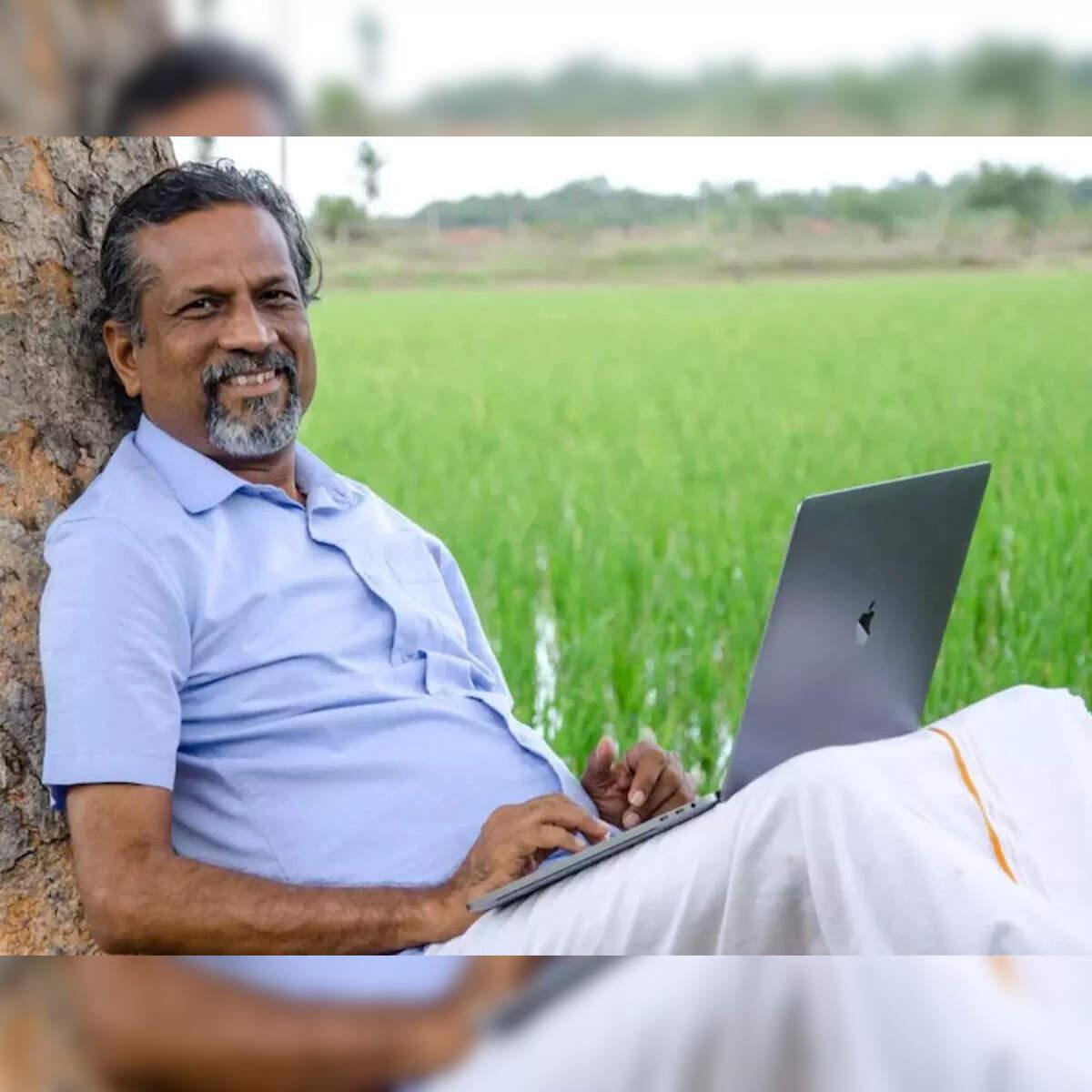
In a technology landscape fixated on scale and speed, Zoho’s cofounder Sridhar Vembu is urging a pause-and a look inward. Calling for a renewed national spirit and a cultural revival, he argues that India’s path forward may be illuminated not by its megacities, but by its villages. It’s a perspective shaped by his own experiments in building teams outside urban hubs and by a belief that resilience, community, and craft thrive where modernity meets memory. As India navigates growth, global ambitions, and the pressures of digitization, Vembu’s message lands as both provocation and proposal: that cultural confidence is a development asset, and rural India offers a blueprint. This article examines the ideas behind his call, the context that informs it, and the questions it raises about where progress should be anchored-and how a nation defines it.
Reframing National Spirit As Civic Practice And Shared Prosperity
National spirit becomes durable when it is expressed as daily, local practice-far from slogans and closer to schoolyards, farms, and factory floors. The thrust of Vembu’s appeal is pragmatic: braid culture into commerce, and let villages set the pace for cities by building trust-rich institutions and local value chains. That means turning sentiment into systems-cooperatives that own data, apprenticeships that bridge classrooms to workshops, and procurement that rewards proximity. Rural India already prototypes this ethos through self-help networks, panchayat innovations, and community-owned services; scaling it is less about capital than choreography: align education, entrepreneurship, and governance so dignity and productivity rise together.
- Village maker labs turning repair culture into micro-industry
- Public data cooperatives safeguarding farmer and artisan insights
- Frugal finance stacks channeling credit to productive use, not consumption
- Regional language-first digital services widening participation
To make this stick, measure what matters. Swap vanity metrics for a civic scorecard that tracks how quickly learning becomes earning, how often rupees circulate locally, and how healthy soils and skills remain over time. Urban firms can partner with rural clusters for “soil-to-software” supply chains, while the diaspora seeds patient capital and export linkages. The payoff is shared prosperity built on mutual responsibility: citizens contribute, institutions reciprocate, and markets reward value created close to home.
| Civic Practice | Shared Outcome |
|---|---|
| Local procurement | Higher village incomes |
| Apprenticeship pipelines | Faster job readiness |
| Data cooperatives | Fair pricing power |
| Soil-health audits | Resilient yields |
| Regional-language tech | Broader participation |

Rural India As Blueprint For Renewal Self Reliance Cooperative Finance And Local Manufacturing
Echoing a call for a renewed national spirit grounded in living traditions, the countryside emerges as a proving ground where community-owned capital, cooperative finance, and local manufacturing can align with modern quality systems. Credit societies and SHGs can underwrite micro-tooling and inventory; panchayats can host vernacular design labs; artisans and farmers can plug into digital marketplaces while retaining control of their brands. The result is not nostalgia, but a pragmatic path to value addition at source, resilient supply chains, and dignified livelihoods that keep culture and skills alive.
- Finance architecture: thrift-led SHGs, credit unions, and PACS for low-cost working capital
- Production: agri-processing, textiles, bamboo and woodcraft, repair-and-refurbish, clean-energy devices
- Tech enablers: open-source CAD/CAM, regional-language ERP, digital payments and logistics rails
- Market access: cluster branding, cooperative e-commerce storefronts, quality certification at the block level
- Design ethos: durability, design-for-repair, and small-batch customization
| Cluster | Co-op Tool | Make | Impact |
|---|---|---|---|
| Bamboo Craft | SHG Credit | Furniture, Baskets | Jobs + Circularity |
| Dairy | PACS | Ghee, Cheese | Better Price Realization |
| Millet Foods | FPO Finance | Ready-to-Cook Mixes | Nutrition + Exports |
| Rural Electronics | Credit Union | Solar Lanterns, IoT | Local Service Hubs |
To turn this into durable progress, institutions must align around training-to-employment pipelines, cooperative procurement, and block-level testing labs that de-risk quality for small producers. Public buyers can preference clusters meeting sustainability standards; banks can reward on-time collective repayments; states can seed maker spaces and apprenticeship corridors that bring engineers into village workshops. Measured by metrics such as local value retained, women-led enterprise share, and reverse migration, this framework reframes growth as a cultural and economic renewal-grounded, distributed, and built to last.

Aligning Culture And Technology Education In Regional Languages Media Pluralism And Design Heritage
Rural classrooms and craft workshops are showing how a culture-first pathway can deepen digital learning without erasing local identities. By teaching coding through folk pattern logic, electronics through loom mechanics, and entrepreneurship via farm-to-market data, learners discover that technology can preserve memory as much as drive efficiency. Media diversity strengthens this bridge when local storytellers, teachers, and coders co-create content across regional languages, community radio, and low-bandwidth apps, using open-source tools and public-domain fonts. The result is a feedback loop where curricula gain context, platforms gain trust, and young makers see their mother tongue and heritage as assets, not obstacles.
- Local-first curricula that map craft skills to computing competencies
- Multilingual UX libraries (typefaces, iconography, motion) for Indic scripts
- Community media pods (radio, podcast, OTT-lite) under open licenses
- Heritage-to-maker toolkits linking looms, sensors, repair, and reuse
- Rural internships and urban residencies with reverse mentorship
- Governance charters covering data commons, consent logs, and attribution
Implementation can stay frugal and rigorous: open curricula in Indian languages, offline-first apps on local servers, small-data models trained on dialects, and design heritage guidelines that respect script proportions, contrast norms, and hand-made ergonomics. Community media labs can safeguard plurality with transparent editorial workflows and shared metrics, while federated rural institutions partner with urban R&D to publish open benchmarks. With co-ops anchoring ownership and micro-credentials recognizing artisans as adjunct instructors, the ecosystem scales responsibly-rooted in place, fluent in code, and confident on the global stage.
| Pillar | Quick Action | Near-term Outcome |
|---|---|---|
| Language | Translate CS modules into 8+ regional tongues | Higher retention and inclusivity |
| Media | Launch 3 community shows per block | Broader, trusted voices |
| Design | Adopt open Indic typefaces and grids | Legible, familiar UIs |
| Skills | Certify artisans as adjunct faculty | Dual credit, hands-on mastery |
| Infrastructure | Deploy offline-first LMS locally | Resilience in low bandwidth |

A Practical Playbook Invest In Village Clusters Apprenticeships Open Source Tools And Diaspora Networks
Answer the call for a renewed national spirit by treating rural settlements as productive ecosystems, not charity sites. Anchor growth in village clusters with a shared cluster commons-connectivity, tools, logistics, and market access-run by panchayat-linked cooperatives. Revive tacit knowledge through apprenticeships that blend craft, agro-tech, and digital services; set skill ladders with fair stipends, local mentors, and rotating “learning yards.” Channel local demand-school meals, clinic supplies, housing upgrades-into cluster contracts, while quality guilds certify output and build reputation.
- Form the cluster: Map 10-15 neighboring villages; pick two anchor trades and one service (e.g., food processing, natural fiber, rural BPO).
- Activate apprenticeships: Pair master practitioners with youth; “earn-while-learning” tied to outputs and safety badges.
- Build the commons: Shared internet, cold-chain, fab tools, testing lab; co-owned and fee-based for upkeep.
- Market link: Digital storefronts, weekly haats, public procurement bids; brand around place, provenance, and quality.
- Finance and governance: Revolving funds, micro-equity, transparent cooperative ledgers; quarterly open audits.
Adopt an open-source-first toolkit to lower costs and raise autonomy: community ERPs (ERPNext/Odoo), field apps (ODK), local clouds (Nextcloud), content libraries (Kiwix), and library systems (Koha). Pair this with diaspora networks that bring mentorship hours, export buyers, and micro-angel pools; design reverse sabbaticals so technologists spend a season in-cluster upgrading processes and training trainers. Keep IP shared under permissive licenses, publish playbooks, and measure wins weekly-jobs retained, incomes stabilized, migration reduced, and new firms registered.
| Lever | First Step | Monthly Cost | Success Signal |
| Open-source stack | Deploy ERPNext + Nextcloud | ₹0-₹5k | Orders tracked end-to-end |
| Apprenticeships | 10 masters, 30 learners | ₹30k stipends | 70% skill badge rate |
| Cluster commons | Co-op Wi‑Fi + tools | ₹8k upkeep | 80% utilization |
| Diaspora bridge | Mentor roster + buyer club | Pro bono | 3 export MOUs |
Concluding Remarks
As the dust settles on the debate, Zoho’s Vembu leaves the conversation not with a verdict, but with a proposition: that national spirit and cultural renewal may draw strength from places often overlooked. Whether rural rhythms can guide urban ambition-and whether heritage can sit comfortably beside modern enterprise-remains an open question, less a slogan than a long project.
What follows will likely unfold in practical choices: how leaders invest, how institutions teach, how communities work, and how individuals measure progress. If this moment becomes more than a sound bite, it will be because ideas find form in patient, local action.
For now, the signal is clear enough. The lens has shifted beyond metros and markets to include the quieter laboratories of village life. What India does with that wider frame-what it chooses to carry forward, adapt, or leave behind-will determine whether this call becomes a movement or a mood. The next chapter belongs to those willing to listen closely, build steadily, and test conviction against everyday reality.