
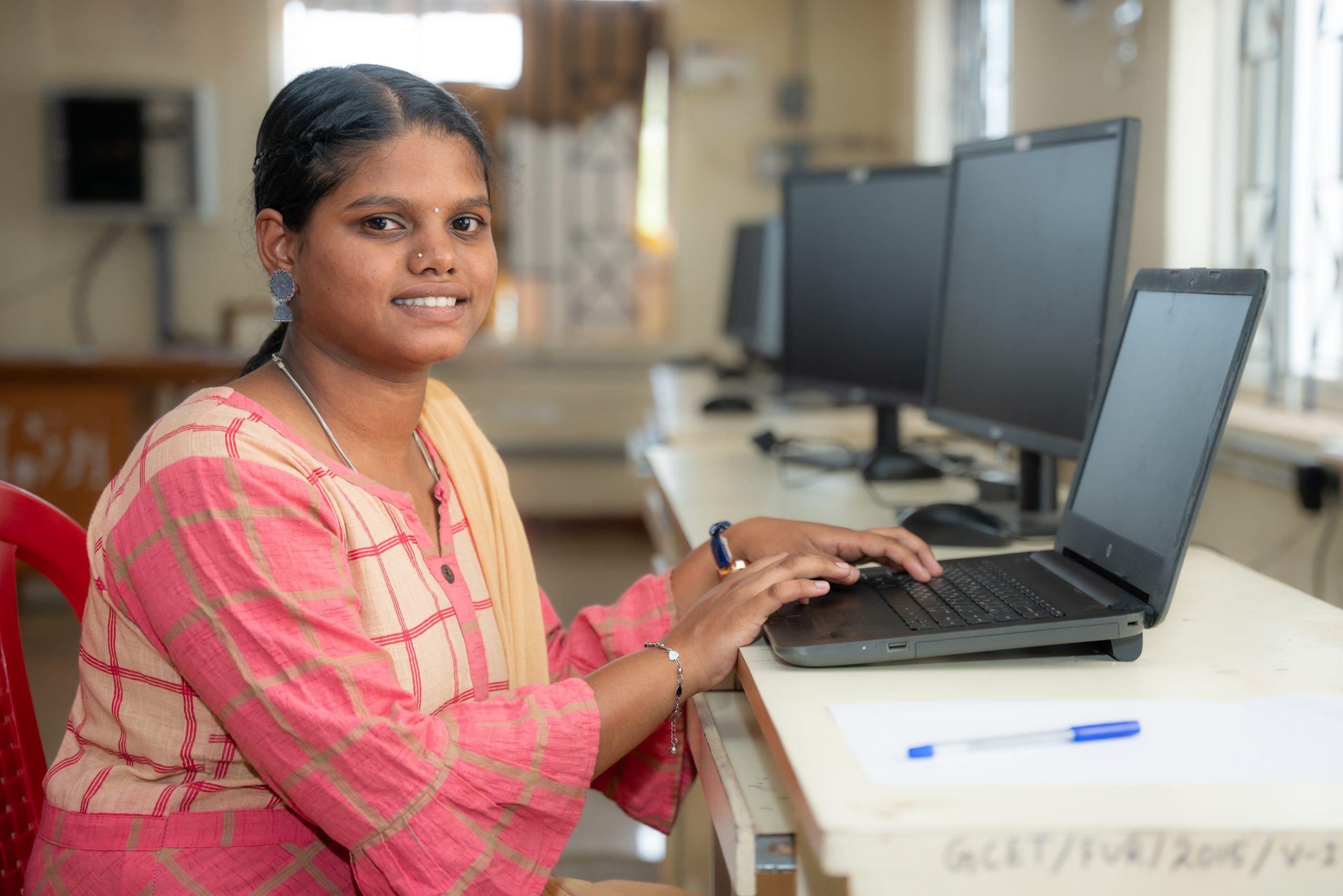
A brief clip racing across social media shows Bill Gates tipping his hat to 15 Indian engineers-crediting them with “building Microsoft.” The remark, delivered with characteristic understatement, has ignited fresh conversation about the deep imprint of Indian talent on the global tech industry and the cross-border collaborations that power it.
Beyond the viral moment, the video taps into a larger story: how decades of STEM education, migration, and mentorship pipelines have intertwined to shape Big Tech’s backbone. For admirers, it reads as overdue recognition; for skeptics, a prompt to scrutinize what “building” really means in companies of Microsoft’s scale. Either way, Gates’s acknowledgment lands as a concise testament to how modern computing is less a single-founder tale and more a mosaic-assembled by teams spanning continents, time zones, and generations.
Inside the viral video Bill Gates credits 15 Indian engineers and reframes the origin story of Microsoft
In a clip ricocheting across social feeds, the tech icon leans into humility, crediting fifteen Indian engineers with helping to “build” the company’s early backbone. The sound bite does more than flatter; it nudges the narrative away from the tidy garage myth toward a messier, truer picture of global collaboration-code shipped across time zones, bug lists hammered down at odd hours, and design choices debated by a team that didn’t all share a ZIP code. What lands is not nostalgia, but a subtle correction: the scaffolding of modern software wasn’t erected by solitary genius, but by an orchestra of quiet expertise.
- Recognition: Elevates engineers who rarely headline the story.
- Reframing: Shifts focus from founders-only lore to shared authorship.
- Resonance: Sparks pride, skepticism, and spirited debate in equal measure.
Beyond the applause lines, the message sits at the crossroads of memory and marketing-part homage, part recalibration. It dignifies the unseen labor of early contributors, especially from India’s talent pool, while inviting a wider conversation about how tech history is told: who gets named, who gets footnoted, and how collective achievement should be archived. If virality is any measure, audiences are ready to revisit the origin tale-not to erase the founders, but to widen the frame.
| Focus | Key note |
|---|---|
| Credit | 15 Indian engineers spotlighted |
| Narrative shift | Team over lone-hero myth |
| Takeaway | Global talent built the base |

The engineers behind Windows Office Azure and security what they built how they solved scale and quality
In the viral clip, a cohort of 15 Indian engineers is spotlighted for shaping product lines that touch billions daily-threading reliability into the Windows core, turning Office into a live canvas for teamwork, scaling Azure to hyperscale elasticity, and hardening security across identity, endpoints, and the cloud. Their fingerprints show up in the less glamorous, most vital layers: scheduler and memory tuning, crash triage and telemetry loops, real-time collaboration and differential sync, regional failover and storage durability, along with zero‑trust enforcement and intelligent detection at machine speed.
- Windows: resilient update rings, driver isolation, faster boot paths, and crash‑safe installers
- Office: live coauthoring, autosave with conflict resolution, and performance budgets for snappy UX
- Azure: global load balancing, autoscaling control planes, erasure‑coded storage, and blast‑radius containment
- Security: identity protection at planet scale, endpoint detection with ML, and defense‑in‑depth defaults
| Area | Scale Challenge | Quality Lever | Result |
|---|---|---|---|
| Windows | Millions of device profiles | Driver segmentation + canary rings | Lower crash rate |
| Office | Real‑time edits worldwide | Operational transforms + throttles | Conflict‑free save |
| Azure | Spiky, global demand | Adaptive autoscale + capacity hints | Stable latency |
| Security | Billions of signals/day | Streaming ML + risk scoring | Faster detection |
What set this group apart wasn’t just code-it was a system for building systems. They worked with SLO‑first roadmaps, feature flags and staged rollouts, aggressive automation, and constant feedback from live telemetry, rewriting small but critical parts until failure paths were as well‑designed as the happy ones. They normalized chaos drills and game days, wrote playbooks for rollback and recovery, and favored safe‑by‑default APIs that made the right thing easy for every downstream team.
- Measure before ship: guardrail metrics and error budgets drive decisions
- Limit blast radius: per‑tenant isolation, regional partitions, fast rollback
- Prove resilience: synthetic load, fuzzing, fault injection, and soak time
- Secure by design: least privilege, hardware‑backed keys, continuous verification

From IITs and IISc to Hyderabad Bengaluru and Redmond the talent pipeline and training systems that powered leadership
Decades of selective education forged a steady stream of builders: from the rigor of IITs and IISc to hands-on labs, Olympiad pipelines, and early research fellowships. As graduates converged in Hyderabad and Bengaluru, they found co-located startups, R&D centers, and public-private testbeds that accelerated practical skills and managerial maturity. The result was a training continuum-entrance exam grit evolving into systems thinking and product craftsmanship-supported by alumni networks and campus-to-corporate bridges that treated engineering as both science and leadership.
- Selective rigor: problem-solving depth, math-first thinking, and lab-intensive projects.
- Industry immersion: internships, coding sprints, and capstones tied to live roadmaps.
- Peer ecosystems: clubs, hackathons, and mentorship loops that de-risked first leadership roles.
- Research linkages: collaborations with national labs and open-source contributions for real-world scale.
- Returnee effect: diaspora-led playbooks brought home, standardizing code quality and review culture.
When that momentum met global product cadence, it aligned with Microsoft’s execution ethos-design reviews, measurable OKRs, and hands-on “learn-by-shipping.” The remark about a core group of Indian engineers underscores a leverage effect: small, exceptionally trained teams owning critical components across time zones, with Hyderabad and Bengaluru syncing nightly with Redmond. Leadership emerged not only from titles but from stewardship of reliability, telemetry, and developer experience-turning training systems into enduring product leadership.
- Training playbooks: Engineering Excellence, internal bootcamps, and manager fundamentals.
- Capability hubs: platform services in India; feature ownership and integration in Redmond.
- Roles that scale: IC-to-architect tracks, TPMs owning cross-team narratives, data-driven managers.
- Product impact: Azure reliability, Windows telemetry, Office localization, and performance tooling across repos.
- Culture carriers: code reviews, design docs, and postmortems institutionalized across sites.

Recommendations for tech leaders universities and governments invest in research centers apprenticeships flexible visas and mentor networks
When a company’s legend points to a handful of engineers as catalytic, it’s a signal to redesign the talent pipeline for scale and depth. Tech leaders can seed applied research hubs near universities, align paid apprenticeships to live product backlogs, and quantify mentorship as a first-class KPI. Pair flexible work policies with cross-border mobility so great teams are assembled where the problems are, not just where the HQ is. Treat senior engineers as community multipliers: structured office hours, code clinics, and alumni loops that turn one breakthrough into many.
- Fund domain labs: AI-for-health, fintech security, climate data tooling, co-run with faculty.
- 12-month apprenticeships: cohort-based, product-owned sprints, conversion goals baked in.
- Mentor quotas: staff engineers book 2-4 hrs/week; track mentee outcomes, not meetings.
- Transparent ladders: publish skill rubrics; tie raises to demonstrable impact.
- Flex visas + remote: hire where talent lives; support short-cycle travel for releases.
Universities and governments can make this durable by synchronizing curricula with industry roadmaps, opening IP pathways for student-led ventures, and lowering friction at the borders of learning and work. Build national mentor networks that connect diaspora experts with local cohorts, launch fast-track innovation visas, and prime early research with matching grants and public datasets. The outcome: more “fifteen-person miracles” repeating across sectors, regions, and generations.
- University playbook: co-op semesters, capstone fellowships, 70/30 shared IP for spinouts.
- Government levers: 30-day agile visa track, R&D tax credits, apprentice wage subsidies.
- Mentor networks: diaspora council, reverse-sabbaticals for industry vets, public hackathons.
- Open data: anonymized health, mobility, and climate sets with privacy guardrails.
| Initiative | Owner | Time-to-launch |
|---|---|---|
| HealthAI Lab | Tech + Univ | 90 days |
| National Mentor Grid | Gov + Alumni | 60 days |
| Returnee Visa Lite | Gov | 45 days |
| Product Apprenticeships | Tech Orgs | 30 days |
To Wrap It Up
In the end, the viral clip is less a rewrite of history than a reminder of it: global companies are built by global hands. Gates’s nod to fifteen Indian engineers has stirred pride, debate, and a fresh look at how credit is shared in projects that span decades and continents.
Strip away the headlines and the sentiment still holds. Behind every release and milestone sits a long ledger of names, roles, and quiet breakthroughs-from India and everywhere else-written into the source code of Microsoft’s story. Whether the moment lands as recognition, recalibration, or both, it gestures toward a simple truth: modern tech is a relay, not a solo sprint.
As the video continues to circulate, that may be its most durable echo. Not the virality, not the exact number, but the acknowledgment that the architecture of innovation is a tapestry-many threads, one fabric.