
Crypto Treasury Companies Pose a Similar Risk to the 2000s Dotcom Bust
As corporate treasuries and crypto-native organizations increasingly hold digital assets, a familiar pattern is emerging-one that echoes the excesses and vulnerabilities of the 2000s dotcom bubble. This comprehensive guide unpacks those parallels, explains the real risks, and offers practical ways to build a robust crypto treasury strategy without repeating history.
Introduction: The Bubble Playbook Feels Familiar
The dotcom era showed what happens when technological revolutions meet easy money, unproven business models, and euphoric narratives. Fast-forward to the crypto economy, and we’re seeing similar signals: aggressive risk-taking, opaque accounting, valuation narratives replacing fundamentals, and corporate treasuries betting big on volatile assets.
Whether you’re a CFO evaluating Bitcoin as a “digital gold,” a startup funded by native tokens, or a DAO allocating treasury into yield strategies, the lesson is the same: crypto treasury companies can face systemic and self-inflicted risks that mirror the dotcom bust. The good news? With sober governance and disciplined risk management, you can capture upside without courting a crash.
What Exactly Is a “Crypto Treasury Company”?
In this article, “crypto treasury company” refers to any organization where crypto assets materially influence the balance sheet, liquidity profile, or strategic positioning. That includes:
- Public and private companies holding Bitcoin, Ether, or stablecoins as treasury reserve assets
- Crypto-native startups funded by native tokens, using them for compensation, collateral, or acquisitions
- DAOs managing large on-chain treasuries across tokens, stablecoins, and DeFi positions
- Fintechs, exchanges, miners, and infrastructure firms with substantial token exposure
In all cases, a core challenge remains the same: how to manage liquidity, valuation, and governance risks across a highly correlated, 24/7, global, and often thinly regulated market.
Why the Crypto Treasury Boom Resembles the Dotcom Bubble
The similarities are not superficial-they’re foundational. The dotcom era hinged on transformative technology wrapped in speculative optimism. Crypto treasury strategies can slip into the same trap.
Key Parallels
- Narrative-led valuation: “Network effects will fix it later” becomes a substitute for unit economics and treasury discipline.
- Cheap money → risk-on behavior: Low rates fueled both dotcom and crypto cycles, with growth narratives eclipsing cash flow realities.
- Using overvalued assets as currency: Dotcom firms used inflated equity to buy growth; crypto firms may use native tokens or BTC as collateral or for deals.
- Liquidity illusions: Market cap “feels” large, but true exit liquidity can vanish fast in crises-just like in 2000-2002.
- Complexity theater: Jargon hides leverage and basis risks (then “eyeballs and clicks,” now “TVL and staking APY”).
| Dotcom Era | Crypto Treasury Era | Risk Signal |
|---|---|---|
| Overvalued equity used for M&A | Tokens/BTC used as collateral/payment | Reflexive balance sheets |
| “Eyeballs” as KPI | “TVL/APY” as KPI | Unstable performance metrics |
| Poor cash flow discipline | Yield-chasing in DeFi | Liquidity mismatch |
| Thin float, volatile trading | On-chain/off-exchange liquidity gaps | Exit risk in selloffs |
| Regulatory lag | Evolving crypto rules | Policy shock exposure |
Core Risks for Crypto Treasury Companies
These are the risks most often underestimated by boards, CFOs, and DAO governors.
1) Volatility and Drawdown Risk
Bitcoin and Ether have historically experienced 60-85% peak-to-trough declines during bear cycles. Mark-to-market losses hit earnings, covenants, and capital-raising options-all while liquidity needs persist.
2) Liquidity Mismatch
Liabilities (payroll, vendors, debt service) are fiat and time-bound; crypto assets are volatile and may be illiquid during stress. “Sell when you must” is the worst time to sell.
3) Collateral and Margin Spirals
Using volatile assets as collateral can trigger margin calls and forced liquidation cascades. Cross-collateralization and rehypothecation amplify drawdowns, just as margin loans did in the dotcom unwind.
4) Counterparty and Custody Risk
Exchanges, brokers, lenders, and custodians can fail or gate withdrawals. Cold storage, multi-sig/MPC, and segregated accounts reduce-but do not eliminate-operational risk.
5) Regulatory, Accounting, and Tax Risk
Rules vary by jurisdiction and are rapidly evolving. Misclassifications, poor disclosures, or aggressive assumptions can draw scrutiny and spook investors.
6) Concentration and Correlation Risk
Crypto assets are highly correlated in crises, and often move with other “risk-on” assets. Diversification within crypto may not help during system-wide selloffs.
7) Reputation and ESG Risk
Energy use debates, compliance lapses, and consumer protection concerns can affect brand and stakeholder relations, particularly for public companies.
8) Operational Risks (Keys, Governance, Human Error)
Key management failures, insufficient approvals, and poor incident response can lead to irreversible losses. Human and process controls matter as much as market strategy.
Accounting and Disclosure: What Changed and What Didn’t
US GAAP (FASB) Update
- FASB ASU 2023-08 introduced fair value accounting for certain crypto assets, with changes in fair value recognized in net income for fiscal years beginning after December 15, 2024 (early adoption permitted).
- This replaces the prior impairment-only model for eligible crypto assets and brings more timely, symmetric recognition of gains and losses-but also more earnings volatility.
- Enhanced disclosures are required, including rollforwards, cost basis, and concentration information.
IFRS (IAS 38) Considerations
- Cryptocurrencies are generally accounted for as intangible assets. Entities may use the revaluation model if an active market exists; otherwise, cost less impairment is typical.
- Classification as inventory may apply in specific broker-trader circumstances; otherwise, these are not financial assets under IFRS.
Investor Relations Implications
- Earnings swings tied to crypto prices require clear MD&A explanation and sensitivity analysis.
- Be cautious with non-GAAP metrics that “add back” crypto losses; transparency builds trust.
- Disclose risk management policies: hedging, limits, custody arrangements, and liquidity buffers.
Liquidity and Market Structure: The Hidden Fault Lines
- On-exchange depth vs. market cap: Headline market cap obscures real executable liquidity. Slippage spikes during volatility and weekends.
- Stablecoin dependencies: Treasury operations often assume instant dollar liquidity via stablecoins. Depegs and issuer risk are non-trivial.
- OTC and derivatives: While CME futures and OTC options can hedge, basis risk and counterparty exposure remain. Derivatives require robust collateral and P&L monitoring.
- Correlation with tech equities: Crypto tends to tighten correlation with risk assets in stress, undermining diversification narratives when you need them most.
Case Studies: Lessons Without the Hype
MicroStrategy’s Bitcoin Strategy
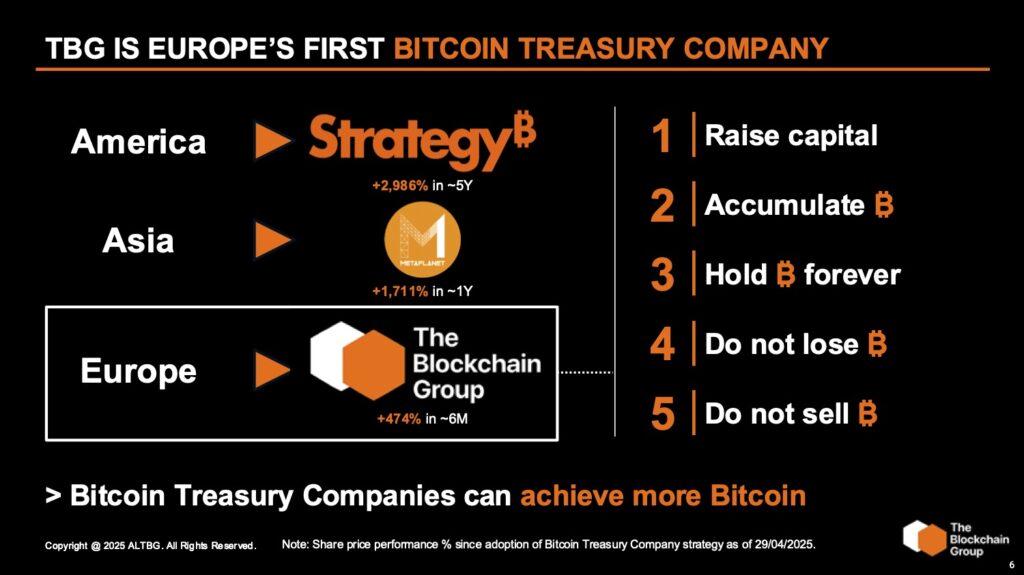
MicroStrategy adopted a high-conviction Bitcoin treasury approach, including debt-financed purchases. The company’s equity has at times traded as a leveraged proxy for BTC. Lesson: a treasury strategy can become your core valuation driver-magnifying both upside and downside-and leverage compounds the effect.
Tesla’s Partial Exit
Tesla purchased Bitcoin in 2021 and later sold a significant portion in 2022. Lesson: even strong operators adjust exposure as conditions change. Liquidity access, accounting effects, and investor communication matter more than ideology.
Yield Chasing and the Terra/UST Collapse
In 2022, some treasuries sought high stablecoin yields linked to Terra’s Anchor protocol. When the UST stablecoin depegged, losses rippled across funds, DAOs, and companies. Lesson: yield often masks layered risks (algorithmic design, collateral quality, reflexive liquidity). Always question how the yield is generated and who ultimately bears the tail risk.
When Crypto in Treasury Makes Sense
Crypto isn’t inherently reckless. It becomes risky without controls. The most resilient use cases include:
- Strategic alignment: Serving crypto-native customers or ecosystems where holding certain assets supports growth.
- Cross-border efficiency: Faster settlements and reduced fees for international operations when well-structured.
- Diversification with discipline: Modest allocations with clear limits, governance, and hedging can provide convexity.
- Operational liquidity: Stablecoins as working capital rails-with robust issuer due diligence, on/off-ramps, and redundancy.
Practical Risk-Management Tips for CFOs and DAO Treasurers
- Write a crypto treasury policy: Define purpose, eligible assets, caps (by asset and in aggregate), rebalancing, hedging, and exit criteria.
- Stress test hard: Model 70-90% drawdowns, multi-week illiquidity, 30-50% stablecoin haircuts, and correlation spikes.
- Match liquidity to liabilities: Keep fiat or short-duration stable liquidity buffers for 6-12 months of fiat liabilities.
- Diversify custody and venues: Use institutional-grade custody with multi-sig/MPC, segregated accounts, and insurance where available.
- Hedge exposure professionally: Use regulated futures/options with strict collateral rules; monitor basis and counterparty risk.
- Ban circular collateralization: Avoid pledging your own token or highly correlated assets for critical obligations.
- Enhance disclosure: Publish holdings, concentration, valuation policy, and risk controls. Transparency reduces rumor risk.
- Governance and approvals: Dual controls, spend limits, 24/7 incident response, and audited smart-contract interactions.
| Treasury Control | KPI / Limit | Owner |
|---|---|---|
| Allocation cap | < 5-10% of total assets (risk appetite) | Board/CFO |
| Liquidity buffer | 6-12 months fiat runway | Treasury |
| Drawdown test | Stress BTC/ETH -80% | Risk/FP&A |
| Counterparty exposure | < 20% per venue/custodian | Treasury |
| Hedging policy | Delta targets, VaR limits | Risk Committee |
Early Warning Indicators to Watch
- Market microstructure: Worsening order book depth, rising spreads, declining open interest quality.
- Funding and basis: Extreme positive or negative funding rates, basis blowouts between spot and futures.
- Stablecoin metrics: Net redemptions, narrowing diversification across issuers, and depegging episodes.
- On-chain signals: Exchange inflows/outflows, miner selling, whale distribution patterns.
- Regulatory pulse: Enforcement actions, AML/KYC rule shifts, or accounting/tax guidance that changes treatment.
- Correlation regime shifts: Rising correlation with high-beta tech during stress-your diversification is fading.
SEO Quick Facts: Crypto Treasury Risk vs. Dotcom Bubble
- Crypto treasury risk is amplified by volatility, liquidity gaps, and correlated drawdowns.
- US GAAP has moved to fair value accounting for certain crypto assets (ASU 2023-08), increasing earnings volatility but improving transparency.
- IFRS generally treats crypto as intangible assets (IAS 38), with limited cases for revaluation.
- Effective risk management requires robust policy, hedging, custody, and disclosure-not just price conviction.
Conclusion: Don’t Repeat the Dotcom Mistakes
Crypto is a transformative technology, just as the internet was in the late 1990s. The dotcom bust wasn’t an indictment of the internet-it was a correction of exuberant capital allocation and weak governance. Today’s crypto treasury companies face the same test. Will they deploy discipline, or chase narrative-driven returns with fragile liquidity and leverage?
If you hold or plan to hold digital assets in your corporate treasury, treat them like any other high-beta, high-innovation exposure: cap it, hedge it, stress test it, and disclose it. The winners of the next decade will be those who harness crypto’s utility while building resilient balance sheets and transparent governance-avoiding the excesses that made the dotcom bust so painful.
Disclaimer: This article is for informational purposes only and does not constitute accounting, legal, tax, or investment advice. Always consult qualified professionals for guidance tailored to your organization.