
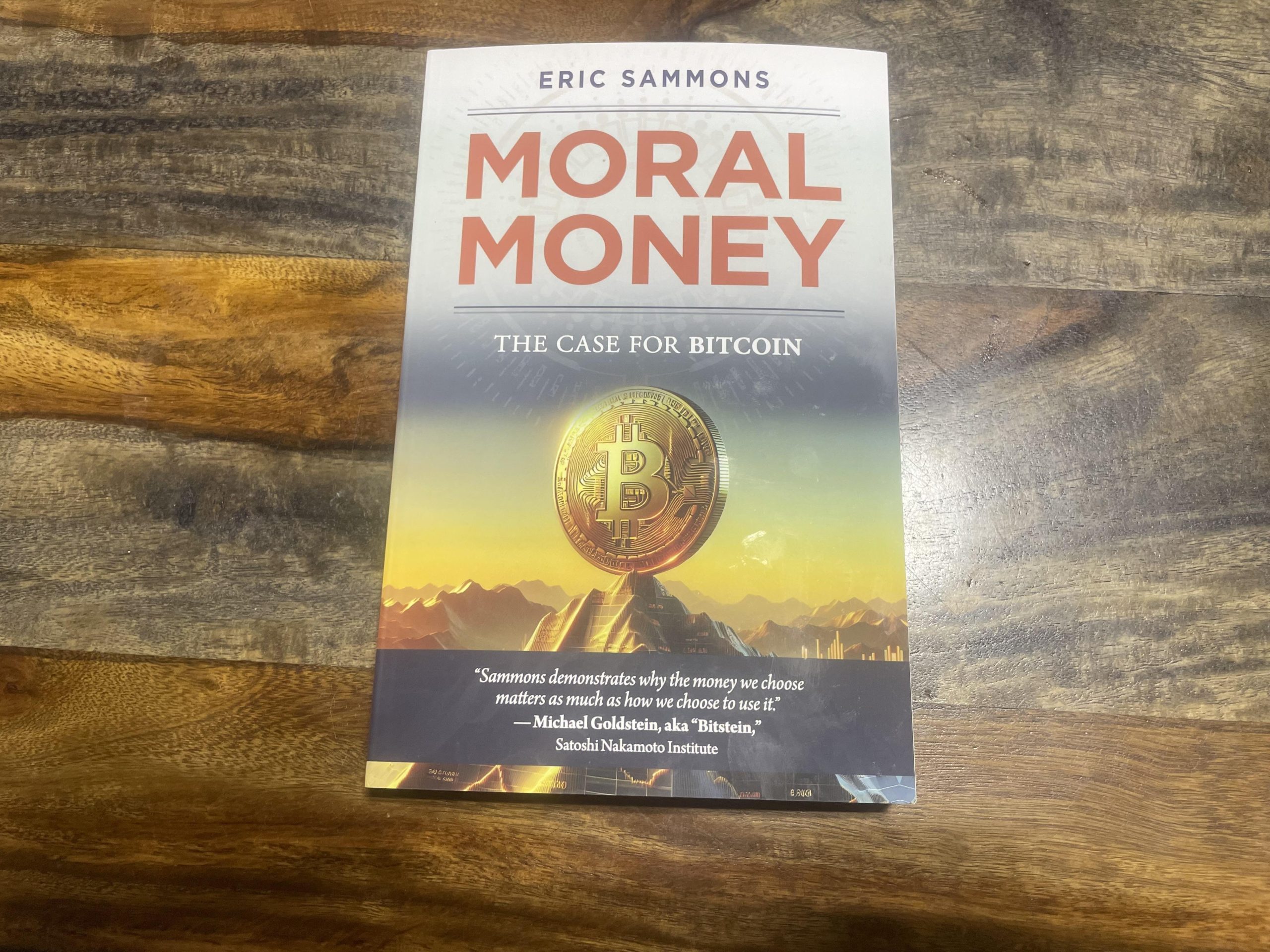
The Moral Case for Bitcoin: How BTC Ends the War Machine
By Guest Author • Updated for 2025
What if the greatest lever for peace in the 21st century isn’t a treaty, an institution, or a politician-but a monetary protocol? The moral case for Bitcoin argues that a transparent, rules-based form of money can reduce the financial incentives for war, restrain the power of the military‑industrial complex, and empower individuals in conflict zones. This article explores how Bitcoin (BTC) could help end the “war machine” by changing how states fund violence, how citizens save and transact, and how global economic coordination operates in a digital age.
In plain terms: fiat currency makes it easy to finance wars through debt and inflation. Bitcoin makes that harder by removing seigniorage and reintroducing fiscal discipline. While no technology is a silver bullet, BTC’s properties-fixed supply, open verification, censorship resistance, and global settlement-create a new set of incentives that can nudge states toward peace and citizens toward prosperity.
The Moral Foundation: Why Money Ethics Matter
Money is a coordination tool. If the tool is corruptible, so are the outcomes. Ethical money should be:
- Hard to debase: No privileged party should silently siphon value via inflation.
- Open and neutral: Anyone can participate regardless of citizenship, race, or politics.
- Verifiable: Rules are clear; cheating is impossible without detection.
- Resilient: Resistant to censorship and confiscation, especially in crises or conflicts.
Bitcoin aligns closely with these ethics. Its supply is fixed at 21 million, issuance is transparent, and the network is secured by proof-of-work. This makes BTC a compelling “sound money” alternative to fiat systems that can be expanded at the discretion of central authorities. That difference-rules-based versus discretion-based-has profound consequences for how wars get funded and prolonged.
Fiat Currency and the War Machine: The Mechanics
Historically, large-scale wars have often required extraordinary financing. Under a gold standard, governments faced natural constraints: metal reserves limited money creation, and direct taxation or bond sales had clear political costs. In fiat systems, however, governments can fund wars by issuing debt that central banks help monetize. This channels resources through inflation-an implicit, broad tax that citizens rarely vote on.
How Fiat Enables “Infinite Funding”
- Debt monetization: Central banks buy government bonds, keeping borrowing costs low.
- Financial repression: Savers earn interest below inflation, subsidizing deficits.
- Opacity: Monetary expansion is complex, making public scrutiny difficult.
- Global privilege: Reserve currencies can externalize costs to foreign holders.
The result is a system that can sustain long, costly conflicts without explicit consent each election cycle. This is the essence of the “war machine”: a set of incentives, institutions, and funding channels that make war too easy to initiate and too slow to end.
| Funding Mechanism | Political Cost | Transparency | War Incentive |
|---|---|---|---|
| Direct Taxes | High (voter backlash) | High | Low |
| Bonds (Market-Funded) | Medium | Medium | Medium |
| Debt Monetization (Fiat) | Low (hidden inflation) | Low | High |
Bitcoin’s Peace Thesis: How BTC Changes Incentives
Bitcoin disrupts the funding model of the war machine by making inflationary finance harder and more visible. When governments can’t print or easily dilute, they must:
- Tax openly (which voters notice), or
- Borrow at market rates (which can rise in wartime), or
- Cut other spending (which has political consequences).
Key Properties That Restrain War Funding
- Fixed supply: No elastic monetary base to quietly socialize war costs.
- Open ledger: While pseudonymous, on-chain flows are auditable in aggregate, boosting accountability.
- Self-custody: Citizens can protect savings from confiscation or debasement in unstable regimes.
- Global settlement: Cross-border donations and commerce can route around capital controls and censorship.
| Dimension | Fiat Standard | Bitcoin Standard |
|---|---|---|
| Supply Policy | Discretionary | Fixed, algorithmic |
| War Financing | Inflation, repression | Tax/borrow only |
| Citizen Consent | Implicit | Explicit |
| Human Rights | Funds can be frozen | Censorship resistance |
| Auditability | Opaque | Transparent rules |
Bitcoin Peace in Practice
Imagine a world where most savings are in BTC or BTC-backed assets. Wartime spending would require visible taxes or bond issuance. Voters would face the real price of conflict immediately rather than decades later through stagflation or devalued pensions. This doesn’t eliminate wars, but it raises the political cost threshold and shortens the runway for prolonged, discretionary conflicts.
Case Studies and Real-World Signals
While a full “Bitcoin standard” is hypothetical, early signals show how BTC can constrain coercive finance and support people in crisis.
1) Conflict-Zone Donations and Rapid Aid
- In several conflicts and humanitarian emergencies, crypto donations have moved faster than traditional rails, getting funds to the ground within hours instead of days.
- Public addresses enable real-time transparency; donors can verify receipt and movement of funds on-chain.
2) Authoritarian Capital Controls
- Citizens in countries facing hyperinflation or strict FX controls have used Bitcoin as a savings escape valve, preserving purchasing power when local currencies fail.
- Journalists, NGOs, and dissidents have used BTC to bypass financial censorship and continue operations when bank accounts are frozen.
3) Sanctions, De-dollarization, and Neutral Settlement
- As geopolitical blocs pursue de-dollarization, BTC offers neutral settlement without granting new monetary hegemons disproportionate power.
- Neutrality lowers the stakes of currency conflicts and can reduce financial escalations that precede kinetic conflict.
| Use Case | BTC Advantage | Peace Impact |
|---|---|---|
| Humanitarian aid | Fast, borderless | Quicker relief |
| Dissident funding | Censorship resistance | Free speech |
| Savings in crises | Hard money | Stability |
| Trade settlement | Neutral ledger | Lower tensions |
First-Hand Perspective
As a content writer who has worked with NGOs in high-inflation regions, I’ve witnessed project leads rely on Bitcoin to keep operations running when banks delayed transfers or local currency collapsed. Small Lightning Network payments covered mobility, communications, and food for field staff-no weeks-long approvals, no frozen wires. It wasn’t ideological; it was practical. BTC kept people safe and the mission alive.
Common Objections and Clearheaded Rebuttals
“Bitcoin uses too much energy.”
Bitcoin’s energy use secures a global, non-sovereign monetary network-substituting energy for coercion. Much of mining has migrated to regions with stranded, curtailed, or renewable energy. Growing data suggest mining can stabilize grids, monetize waste methane, and incentivize build-out of renewables. The ethical comparison isn’t BTC versus nothing; it’s BTC’s energy cost versus the human, economic, and environmental cost of inflationary finance and perpetual conflict.
“Criminals use Bitcoin.”
Criminals use every form of money. On-chain analysis shows illicit flows are a small fraction of activity, and Bitcoin’s traceability often aids enforcement. Meanwhile, fiat enables massive illicit finance through opaque offshore systems. We should judge tools by net social impact, not edge cases.
“Volatility makes BTC unusable.”
Volatility is a function of early adoption. As market depth grows, volatility historically trends lower. For day-to-day needs, users can hold stable-value assets but settle or save in BTC. The Lightning Network enables near-instant, low-fee BTC payments that can be hedged or converted as needed.
“Governments will ban it.”
A decentralized, global network is hard to ban successfully. Jurisdictions that embrace Bitcoin can attract capital, talent, and energy innovation. The more integrated BTC becomes, the higher the political cost of repression and the greater the incentives for regulatory clarity instead of prohibition.
Benefits and Practical Tips for Ethical Bitcoin Use
Key Benefits
- Censorship-resistant savings for at-risk populations
- Borderless remittances and humanitarian aid
- Transparent, auditable fundraising for civil society
- Reduced reliance on inflationary finance
- Neutral, rules-based global settlement
Practical Tips
- Self-custody best practice: Use a reputable hardware wallet; write down seed phrases on durable media; consider multisig for higher security.
- Privacy hygiene: Coin control, new addresses per receive, and awareness of KYC trails. Use privacy-preserving tools in line with local laws.
- Payments: Leverage the Lightning Network for fast, low-fee transactions, especially in conflict or disaster zones where every minute counts.
- Operational security: Keep devices updated, use strong passphrases, and segment roles (fundraising vs. disbursement) among multiple signers.
- Compliance: Understand tax and reporting obligations in your jurisdiction; comply with humanitarian corridors and sanctions rules when applicable.
| Goal | BTC Tool | Quick Tip |
|---|---|---|
| Secure savings | Hardware wallet | Enable passphrase |
| Micro-aid | Lightning wallet | Use LNURL |
| Shared custody | Multisig | 3-of-5 signers |
| Transparency | Public address | Proof-of-donations |
| Privacy | Best practices | New addr each time |
For NGOs and Journalists
- Publish a read-only treasury address for transparency while keeping operational wallets private.
- Separate donation intake from spending using different wallets and policies; use multisig with geographically distributed signers.
- Train staff on phishing, seed storage, and emergency procedures. Practice disaster recovery drills.
Quick FAQs
Does Bitcoin alone end war?
No single tool can end war. But Bitcoin can shift the financial calculus, increasing the political cost of conflict and empowering citizens with resilient savings and payments.
Isn’t inflation sometimes necessary in war?
Emergency finance may be unavoidable, but BTC forces explicit choices-taxation, borrowing, or reallocation-making leaders accountable for trade-offs instead of relying on stealth inflation.
What about CBDCs?
Central bank digital currencies may improve efficiency but can centralize control and enable granular financial surveillance. Bitcoin provides an open alternative with different trust assumptions.
SEO Keywords and Phrases Used
moral case for Bitcoin, how Bitcoin ends the war machine, Bitcoin and war, BTC ethics, sound money, fiat currency, military-industrial complex, Bitcoin peace theory, Bitcoin adoption, de-dollarization, human rights, censorship-resistant money, Lightning Network, proof-of-work energy, inflation hedge, self-custody, CBDC risks, sanctions, financial repression, open monetary network.
Conclusion: A Monetary Vote for Peace
The moral case for Bitcoin is, at its core, a case for consent over coercion. Fiat systems make it cheap and quiet to finance wars by diluting savings. Bitcoin makes that hard. By replacing discretion with rules, opacity with transparency, and privilege with neutrality, BTC can reduce the structural incentives that keep the war machine well-fed.
Will Bitcoin single-handedly end conflict? No. But it can constrain its worst excesses by restoring fiscal honesty and empowering individuals and civil society. Every sat saved and every payment routed through an open, permissionless network is a small vote for a world where power is checked, consent matters, and peace has a fighting chance. That is the ethical promise-and the practical pathway-of Bitcoin.