

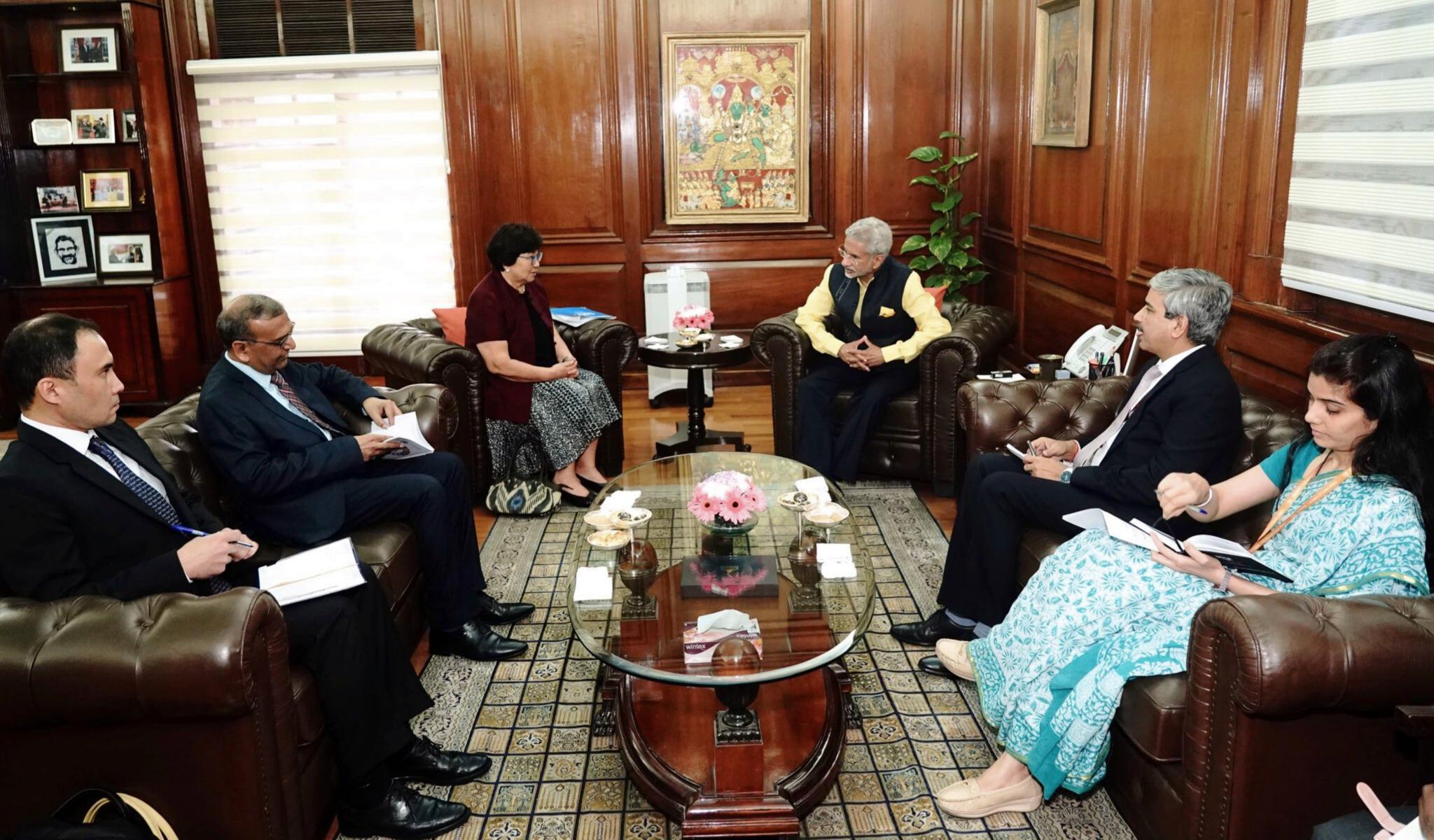
A measured shift is underway in India’s Afghanistan policy. After a meeting between External Affairs Minister S. Jaishankar and Afghanistan’s Foreign Minister, New Delhi signaled plans to upgrade its technical mission and move toward reopening its embassy in Kabul-an outpost it shuttered amid the turmoil of 2021. The step suggests a pragmatic tilt from distant management to limited on-ground engagement, aimed at restoring consular services, safeguarding development projects, and stabilizing channels for humanitarian assistance.
The contours remain cautious. Re-establishing a fuller presence in Kabul does not necessarily imply a change in India’s formal stance on recognition; rather, it underscores a functional approach to a complex neighborhood reality. As regional dynamics evolve and Afghan needs persist, the recalibration reflects an attempt to balance security concerns with practical diplomacy-keeping lines open, responsibilities clear, and expectations deliberately restrained.

From technical mission to calibrated engagement, what the Jaishankar meeting signals for India Afghanistan relations
New Delhi’s decision to upgrade its technical mission in Kabul alongside External Affairs Minister S. Jaishankar’s engagement with the Afghan foreign minister points to a measured shift from presence to practicality. The aim is to safeguard Indian interests-people, projects, and security-while avoiding the optics of formal recognition. A phased reopening of the embassy restores on-ground verification, crisis response, and service delivery capacity. Expect policy guardrails to hold: counterterror commitments, inclusive governance signals, and a reliance on multilateral humanitarian channels, keeping cooperation purposeful yet deliberately limited.
| Step | Meaning |
|---|---|
| Embassy reopening (phased) | Restore capacity without political endorsement |
| Limited consular services | Support citizens, students, and medical cases |
| Project maintenance | Protect investments like dams and roads |
| Security liaison | Deconflict against anti-India groups |
| Humanitarian pipeline | Scale aid via UN/NGO partners |
Cooperation will prioritize basics and connectivity: healthcare, food security, scholarships, power and water assets, and trade links through Chabahar and Central Asian corridors. Early deliverables could include consular windows, student pathways, and infrastructure upkeep, while security engagement stays narrowly task-focused. The tempo will hinge on assurances for Indian personnel, tangible counterterror action, and space for education and economic participation, particularly for women and youth-conditions that will determine whether this upgrade remains technical or evolves into a steadier diplomatic footing.
- Visas and services: Medical, student, and business facilitation under enhanced scrutiny.
- Project restart: Maintenance of Indian-built assets and small community works.
- Trade corridors: Increased Chabahar usage; calibrated air cargo if security allows.
- Security assurances: Concrete steps against anti-India actors; site protection.
- Education links: Scholarship resumption and digital learning support.
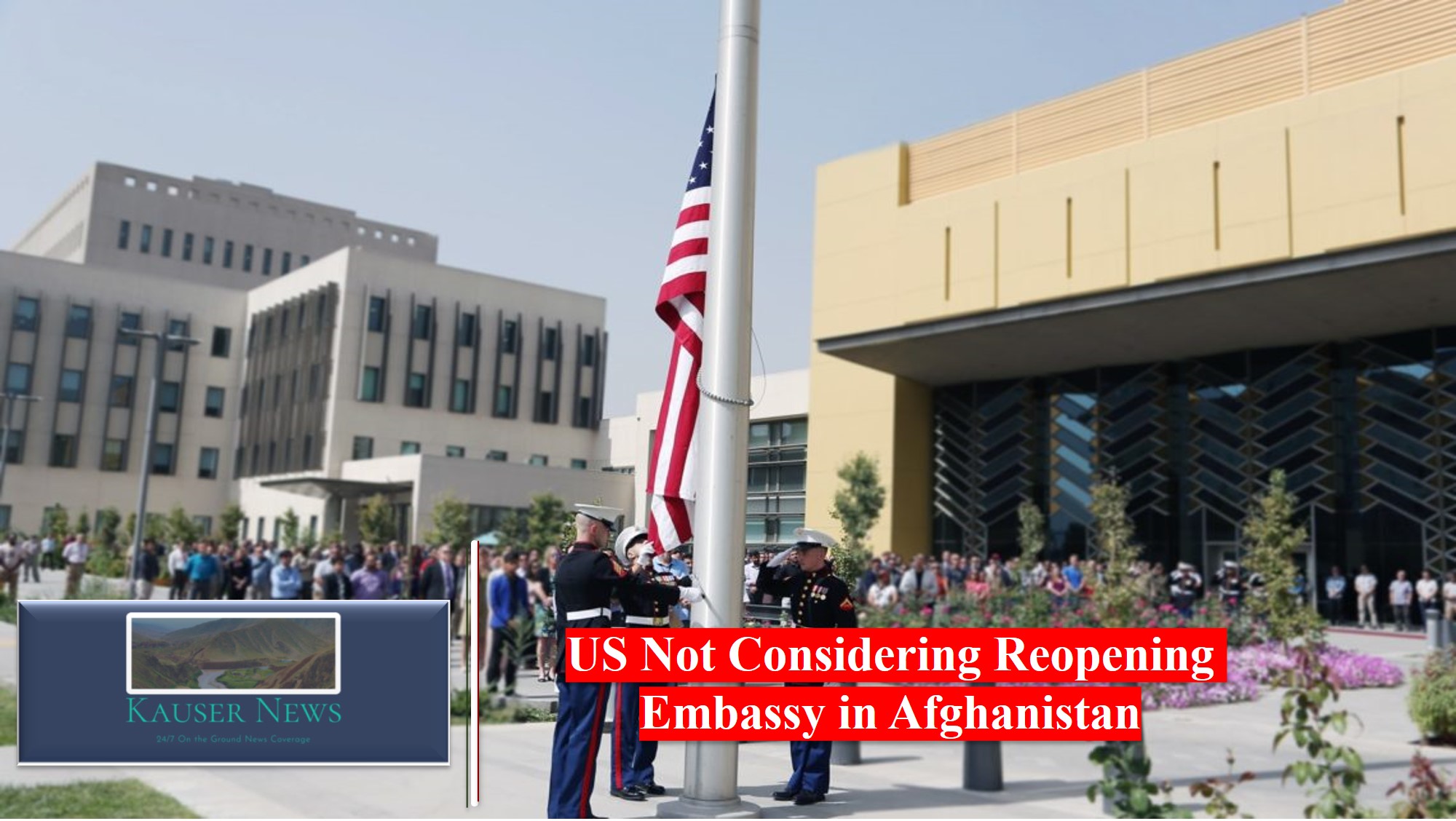
Weighing risks and gains of reopening in Kabul, recognition dynamics, regional reactions, and domestic considerations
New Delhi’s move to “upgrade” its technical footprint in Kabul promises sharper situational awareness and a channel to deliver humanitarian aid, consular support, and development oversight. The strategy trades distance for proximity: closer contact can secure counterterrorism assurances, protect legacy projects, and rebuild commercial corridors, yet it risks optics of implicit legitimization, potential staff vulnerability, and policy blowback if rights deteriorate. The calibration will hinge on tight mandate discipline, clear red lines, and agile drawdown protocols that keep the mission reversible while maximizing diplomatic leverage.
- Gains: on-ground intelligence, faster aid delivery, project verification, crisis response, trade reactivation.
- Risks: perception of recognition, security incidents, reputational costs on rights, sanctions-compliance friction.
- Mitigants: phased reopening, consular-first remit, strict vetting, multilateral cover, measurable benchmarks.
| Actor | Stance | Implication | Watchpoint |
|---|---|---|---|
| Pakistan | Cautious | Influence contest | Cross-border militancy |
| Iran | Pragmatic | Chabahar linkage | Refugees, water rights |
| China | Supportive | Infra/security overlap | Mineral access risks |
| Russia | Coordinating | Moscow-format synergy | Sanctions exposure |
| Gulf States | Facilitating | Air bridges, finance | Compliance, transfers |
| Central Asia | Welcoming | Transit, energy | Border closures |
Diplomatically, the messaging will stress engagement without formal recognition, anchoring any upgrade to benchmarks on inclusivity, women’s education, and counterterror commitments. At home, the calculus must balance political optics and public expectations-prioritizing citizen services, diaspora outreach, and transparent guardrails-while coordinating with the UN and partners to keep sanctions compliance tidy. A small, secure, modular footprint with clear triggers for escalation or pause can convert presence into leverage rather than endorsement, allowing India to navigate regional competition, protect its equities, and remain poised for shifts in Afghanistan’s governance trajectory.

Operational roadmap for a careful return, security protocols, consular priorities, and humanitarian coordination
India’s technical presence will follow a phased, conditions-based re-entry designed to balance operational agility with duty-of-care. The approach emphasizes a minimal initial footprint, redundant logistics, and iterative risk reviews aligned with evolving ground realities. A joint coordination cell will synchronize movements with international actors and local interlocutors, while a compact incident management framework tracks clear “go/no-go” triggers-security, consular demand, and humanitarian need. The mission will privilege essential services, rapid escalations for emergencies, and an auditable trail for procurement and compliance to uphold neutrality, impartiality, and accountability.
- Phase 0 – Remote Posture: Virtual consular intake, partner mapping, and remote vetting of facilities and vendors.
- Phase 1 – Assessment Team: Short-duration visit for site checks, communications testing, clinical/MEDEVAC readiness, and legal assurances.
- Phase 2 – Limited Reopening: Small technical mission with priority services, hardened accommodation, and secure logistics corridor.
- Phase 3 – Scaled Services: Expanded helpdesk, predictable appointment windows, and broader humanitarian interface guided by risk thresholds.
Security protocols will combine layered physical protection, controlled movement, and strict information hygiene, complemented by continuous medical support and evacuation options. Consular priorities center on the welfare of Indian nationals and eligible Afghan applicants, with fast-track channels for emergencies, education, and medical travel. Humanitarian coordination will align with established cluster mechanisms and deconfliction practices, ensuring transparent aid pipelines, safeguarding of local staff, and context-sensitive delivery in partnership with UN agencies and vetted NGOs. A clear matrix of roles will keep decision-making crisp and evidence-based.
- Security: Site hardening, vetted transport, comms encryption, and crisis playbooks (shelter-in-place, relocation, evacuation).
- Consular: Emergency travel documents, attestations, student/medical visa facilitation, welfare hotline, and diaspora liaison.
- Humanitarian: Health and nutrition support, education continuity, cash/voucher pilots, and transparent procurement workflows.
| Track | Lead Unit | Key Partner | First 30-day Output |
|---|---|---|---|
| Security | Mission Ops | Facility Provider | Site hardening + comms test |
| Consular | Consular Desk | Air/Travel Liaison | Emergency docs + intake portal |
| Humanitarian | Aid Coordination | UN/NGO Cluster | Joint needs snapshot |

Policy recommendations for benchmarks, risk management, and safeguards for Afghan partners and Indian personnel
Benchmarks should be phased, measurable, and reversible, signaling progress while preserving leverage and safety for both Afghan partners and Indian personnel. A joint mission board-co-chaired by Indian officials and vetted Afghan interlocutors-can publish monthly scorecards and enforce a “pause-switch” when thresholds are missed. Embed independent verification, minimal data collection, and do‑no‑harm audits across programming; pair each milestone with clear exit ramps and contingency resourcing to avoid mission lock‑in under degraded conditions.
- Operational: Secure perimeter, vetted logistics providers, medical evacuation cover, and 24/7 incident response cell with multilingual hotlines.
- Consular: Limited-scope services (e‑visa, document attestation) with appointment-only flow, gender-sensitive access windows, and anonymous feedback channels.
- Humanitarian: Third‑party monitored aid corridors, traceable supply chains, and local implementing partners trained on safeguarding and ethics.
- Governance: Memoranda on access, non‑interference, and redress; public transparency notes without disclosing sensitive locations or identities.
| Domain | 90‑day Benchmark | 180‑day Benchmark | Verification |
|---|---|---|---|
| Security | Zero perimeter breaches | Joint drills completed | Logs, CCTV, insurer audit |
| Consular | e‑Visa pilot live | Full scheduling system | Randomized case review |
| Aid Delivery | 3 corridors functional | 5 provinces covered | GPS + spot checks |
| Access | Women’s entry windows set | Expanded service hours | Anonymous surveys |
Risk management must be anticipatory, not reactive, anchored in layered safeguards that protect life, dignity, and mission integrity. Use encrypted comms, duty‑of‑care contracts, and safehouse networks; pair dynamic threat modeling with red‑team exercises; and maintain a standing evacuation plan with pre‑cleared air/ground routes. Financial integrity should rely on ring‑fenced accounts, dual approvals, and sanctions screening for vendors; information security should employ least‑privilege access and data minimization to shield Afghan partners from exposure.
- Protective measures: Local security liaisons, trauma-informed staff training, covert travel protocols, and family support for at‑risk partners.
- Financial integrity: Vendor due diligence, whistleblower portals, and real‑time spend dashboards with anomaly alerts.
- Information security: Encrypted devices, secure dropboxes for documents, and time‑bound data retention.
- Accountability: Community oversight panels, quarterly transparency briefs, and a “pause‑criteria” matrix for rapid de‑escalation.
To Wrap It Up
As signals of re-engagement emerge, the path ahead remains measured. Upgrading India’s technical mission and the prospect of reopening the embassy in Kabul point to a cautious recalibration, shaped by security assessments, on-the-ground realities, and the needs of consular and humanitarian work. For New Delhi, the balance is pragmatic: maintain channels that protect people and interests while testing whether conditions permit a broader presence.
What follows will likely be incremental-more coordination, clearer protocols, and careful attention to assurances that make diplomacy workable. In a region where small steps can carry outsized consequence, the meeting sets the tone without presuming the ending. For now, the door is being unlatched rather than thrown open, and the next turn of the handle will be guided by facts, not fanfare.